RSS

Author Archives: Dr. Thomas Johnson | ict-design.org

Unknown's avatar

About Dr. Thomas Johnson | ict-design.org

Dr. THOMAS JOHNSON -intrapreneur, practicing academic, learning coach, designer, technology integration specialist, and educator -has lived in: Canada, Guatemala, Taiwan, Thailand, Turkey, and China -loves: Skiing, Sushi, Badminton, Volleyball, Working Out, Contemporary Art, Clean Lines, Good Food, Great Music, People Watching, Exploring, and his Wife, Son, and Daughter.

The overcrowding of AI (already)

Back in 2021, there were several AI interfaces similar to ChatGPT that you can interact with:

  1. Dialogflow: Dialogflow is a Google-owned AI platform that allows developers to create conversational interfaces for various platforms such as websites, messaging apps, and voice assistants.
  2. Amazon Lex: Amazon Lex is a service from Amazon Web Services (AWS) that enables developers to build conversational interfaces for applications using natural language understanding (NLU).
  3. IBM Watson Assistant: IBM Watson Assistant is an AI-powered chatbot platform that allows businesses to create chatbots that can interact with customers through natural language.
  4. Microsoft Bot Framework: The Microsoft Bot Framework is a set of tools and services that developers can use to create conversational interfaces across multiple channels, including email, SMS, and popular messaging platforms like Facebook Messenger, Skype, and Slack.
  5. Rasa: Rasa is an open-source conversational AI framework that allows developers to build and deploy chatbots and virtual assistants with advanced natural language processing (NLP) and dialogue management capabilities.

These are just a few examples of the many AI interfaces that are available today. Each platform has its own strengths and weaknesses, so it’s important to evaluate your specific needs and requirements before choosing a tool to build your conversational interface.

Today, however, we are seeing the “big guns” release their powerful rivals – possibly before they should be open to the public:

  1. China is sending out the MOSS Chatbot.
  2. Google is unleashing Bard.
  3. Microsoft has Prometheus and has invested in or bought ChatGPT.

My understanding is that many people are figuring out ways around the safeguards put in place, and instead using the AIs for designing unethical, prejudice, deceitful, and possibly dangerous output.

The good news to my ears is that Meta is giving LLaMA AI to scholars and researchers in order to test out and see why these others are failing, having major issues, or are being circumvented. I hope that the foresight of Meta’s LLaMA use and its practitioners will disable major catastrophes from occurring in more of a walled-garden space used by “not-dummies”. I have heard Musk foretell of a bleak future where AI comes from nowhere to wipe-out humanity or begin to use us in ways that we might not want.

Please let us have lots of sense and a less neo-liberal attitude with something that is beyond out comprehension of powerful. We are playing with fire. Let’s have the fire extinguisher on-hand.
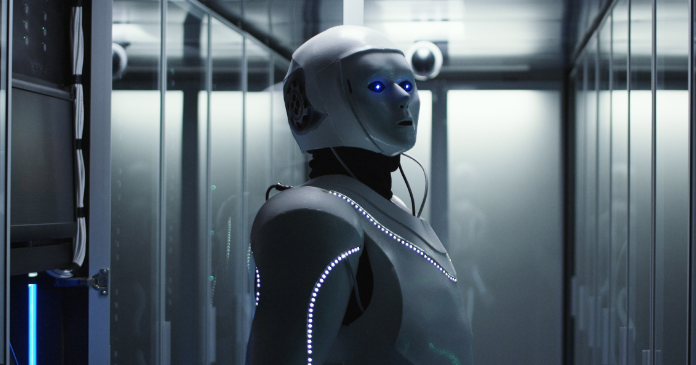



A sarcastic 1000-word essay about AI & AGI

Written by none other than AI:

Ah, Artificial Intelligence (AI) and Artificial General Intelligence (AGI), the buzzwords that everyone loves to throw around without really understanding what they mean. The future of technology, they say, the solution to all of our problems, they say. And yet, here we are, decades after the inception of AI research, and all we have to show for it are some fancy chatbots and recommendation systems that still can’t seem to understand sarcasm.

Don’t get me wrong, AI has certainly made some impressive advancements in specific fields like computer vision and natural language processing. But the truth is, despite all the hype, AI is still far from reaching the level of intelligence that we see in humans, let alone surpassing it. And yet, we’re already talking about AGI as if it’s just around the corner. Ha! The idea of creating a machine that can perform any intellectual task that a human being can is nothing short of delusional.

But let’s not even get into AGI yet, let’s talk about the current state of AI. Despite its limitations, AI is often touted as a silver bullet that can solve all of our problems. It’s the cure for world hunger, the solution to climate change, and the key to unlocking limitless economic growth. Really? Because all I see are algorithms that struggle to accurately identify objects in photos, chatbots that can barely carry a coherent conversation, and recommendation systems that are easily manipulated by data scientists.

And let’s not forget about the ethical issues that arise with AI. Bias and discrimination are inherent in any system that is trained on data, and AI is no exception. The lack of accountability in AI systems means that when things go wrong, there’s no one to hold responsible. And yet, we’re just supposed to blindly trust these algorithms and the companies that develop them? Give me a break.

Now, on to AGI. The idea that we’ll ever create a machine that can match or surpass human intelligence is pure fantasy. First of all, we still don’t even have a solid definition of intelligence, let alone a way to measure it. How can we create something that we don’t even understand? And even if we could, the complexity of the human brain is unparalleled in the known universe. The idea that we could recreate it in a machine is simply ridiculous.

Furthermore, even if we could create an AGI, what makes us think that it would be benevolent or even neutral towards humans? Just because we program it to follow certain rules doesn’t mean it will continue to do so as it evolves and learns on its own. In fact, the idea of a superintelligent AI that could potentially turn against us is a popular topic in science fiction for a reason.

And yet, despite all of these limitations and potential dangers, people continue to pump billions of dollars into AI research and development. Why? Because it’s trendy. Because it sounds cool to say that you’re working on AGI. Because it’s an easy way to make a quick buck by selling snake oil to investors.

In conclusion, AI and AGI are nothing more than buzzwords used to generate hype and drive investment. The reality of the current state of AI is that it’s far from reaching the level of intelligence that we see in humans, let alone surpassing it. And the idea of AGI is pure fantasy. So, let’s all stop pretending that we’re on the cusp of creating superintelligent machines and focus on solving real-world problems with practical, proven solutions.

The writing had me sold until that last bit where it asserted the fact that AGI is pure fantasy. I feel that with the use of AI, AGI might be around the corner sooner than we think – if it is not here already. What are your thoughts?


ChatGPT – but sarcastic

Want to have a laugh? Have ChatGPT write something for you – but sarcastically. I input the following prompt:

And I was returned gold:

Minecraft: The Miracle Cure for Education

Ah, Minecraft. What a delightful tool for education. Who needs actual educational materials when we have this block-building, monster-slaying video game to teach our children? Forget about boring old textbooks and lectures, now we have the thrilling opportunity to have our students learn through the pure excitement of digging holes and setting things on fire.

Not only does Minecraft offer a cutting-edge educational experience, but it also has the added bonus of potentially giving our students hand-eye coordination and the ability to navigate a virtual world. Who needs real-life problem-solving skills when they can build a shelter from zombies in a computer game?

But let’s not forget the true educational value of Minecraft. It teaches our students important life skills, such as how to mine for virtual resources and how to avoid virtual danger. These are skills that will undoubtedly be valuable in their future careers. Who needs a degree in engineering or computer science when they have the expertise to craft a virtual sword?

And let’s not forget the valuable social skills that Minecraft can teach. Students can collaborate and communicate in-game, learning how to work together to achieve a common goal. This is a far more practical use of their time than actually learning how to work together in real life.

So let us embrace this revolutionary tool in education and say goodbye to traditional methods of learning. After all, who needs to understand history, science, or math when they can build a virtual roller coaster? Minecraft: because why settle for an actual education when you can have a virtual one?

In conclusion, Minecraft in education is a stroke of genius. Who needs actual education when we have a video game? Thank you, Minecraft, for saving us from the monotony of learning.

What do you think? How are you using ChapGPT creatively?


I’m all about AR

I went to some PD recently with @PaulHamilton8. Wow! The things I thought I knew and I now know about AR are amazing. I see potential in so many new aspects of teaching and learning. But first, what is AR?

Augmented Reality (AR) is a technology that blends the physical world with digital information and experiences. It enhances the real world environment with virtual objects and images, creating a new dimension to the way we interact with the world around us. In the Apple session, we really focused on Reality Composer, a free app.

Not only did it enable us to create objects to be seen in real life, but we could bring them to like with Behaviors. The behaviors have a Trigger and an Action Sequence (kind of like IF –> THEN). They also enable interaction, and could be used to create movies or stories.

Back to AR in general, he technology has been around for several years, but it has only recently gained widespread attention and interest. This is largely due to advances in computer vision, sensors, and mobile devices. With the rise of smartphones and other connected devices, AR has become more accessible and more widely used.

The potential applications of AR are virtually limitless. From entertainment and gaming to education, and commerce, AR is changing the way we interact with digital information and experiences. For example, AR can be used to create engaging and interactive gaming experiences, allowing players to use their real-world surroundings as part of the game. In the educational field, AR can be used to bring learning to life (CoSpaces), allowing students to experience concepts and ideas in a hands-on and interactive way.

In commerce, AR has the potential to revolutionize the way we shop. With AR, customers can try on clothes, see how furniture would look in their homes (IKEA), and even experience virtual test drives of cars. AR also has the potential to transform the way businesses market and sell their products, by allowing them to create interactive and immersive experiences for their customers.

One of the biggest advantages of AR is that it combines the real world with digital information, creating a more immersive and engaging experience. Unlike virtual reality, which replaces the real world with a digital environment, AR enhances the real world with additional digital information. This allows for a more natural and intuitive interaction with digital information, which is particularly useful for applications like gaming, education, and commerce.

Another advantage of AR is that it can be accessed from a variety of devices, including smartphones, tablets, and AR glasses. This makes AR more accessible to a wider range of users, and it also allows for greater flexibility in how the technology is used.

In conclusion, AR is a technology with tremendous potential to transform the way we interact with digital information and experiences. As the technology continues to evolve and improve, it is likely to become increasingly integrated into our daily lives and play an even bigger role in the future of digital interaction. Whether you are a gamer, student, shopper, or business, AR is a technology that you need to keep an eye on. Any ideas that you have? Please share.