What safety and security measures should be taken to prevent the misuse of AI and ensure its responsible development?
1
13
How might we prevent AI from being used to create autonomous weapons or other systems that could cause harm?
2
15
How might we ensure that AI systems are transparent and accountable, particularly in high-stakes applications such as hiring or criminal justice?
3
14
How might powerful new technologies help create more sustainable and inclusive practices?
4
1
How can we identify and mitigate bias or other problems?
5
2
How might we develop solutions that promote reliability and fairness?
6
3
What ethical and legal considerations should be taken into account when using AI in educational settings?
7
4
How might AI be used to enhance student learning experiences and improve academic outcomes?
8
5
How might AI be used to personalize learning and meet the needs of individual students?
9
10
How might AI be used to support students with special needs or learning disabilities?
10
6
How might the use of AI in education impact the future of work and the skills that students will need to succeed in a rapidly changing job market?
11
7
How might AI be integrated into the curriculum in a way that complements and supports existing teaching practices?
12
8
What measures can be put in place to ensure that students are not simply relying on AI as a crutch, but are actively engaging with the learning process?
13
9
How might the use of AI impact traditional assessments and evaluations of student learning?
14
11
How might the use of AI in education change the role of teachers and the way that they interact with students?
“One area of desirable skills rapidly emerging in the workforce is the capacity to work effectively through prompting: the ability to direct AI systems to generate useful outputs from effective inputs. This is an emerging new literacy that builds on WAB learners’ strong competencies in making connections between subjects, naming and noticing ideas and being able to articulately describe their intentions. The literacy of prompting combines domain-specific knowledge and vocabulary with creative and computational thinking.” Western Academy of Beijing
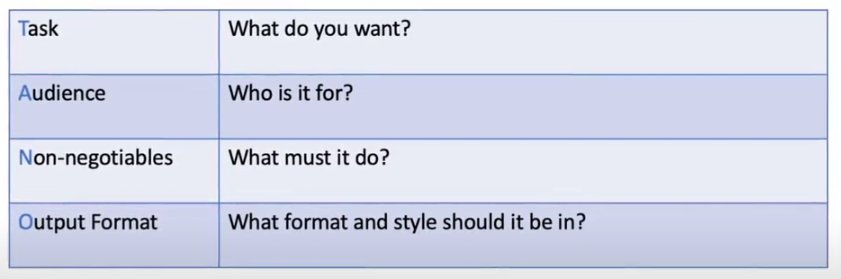
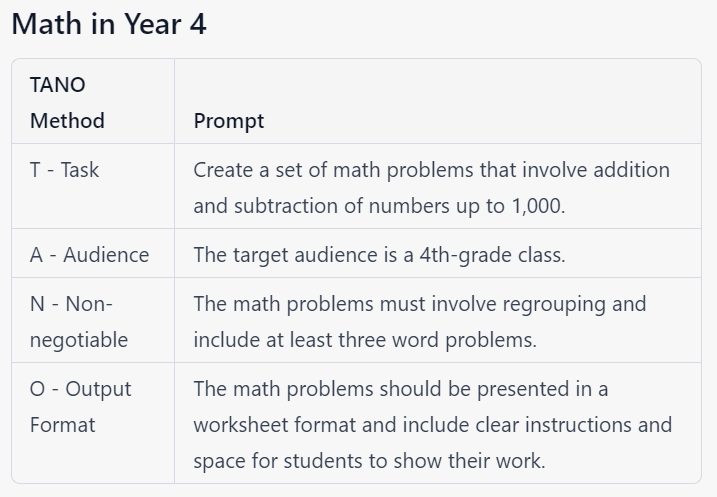
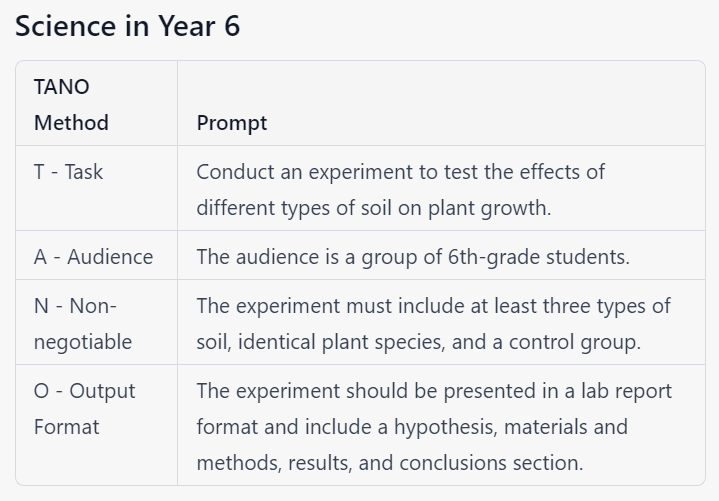
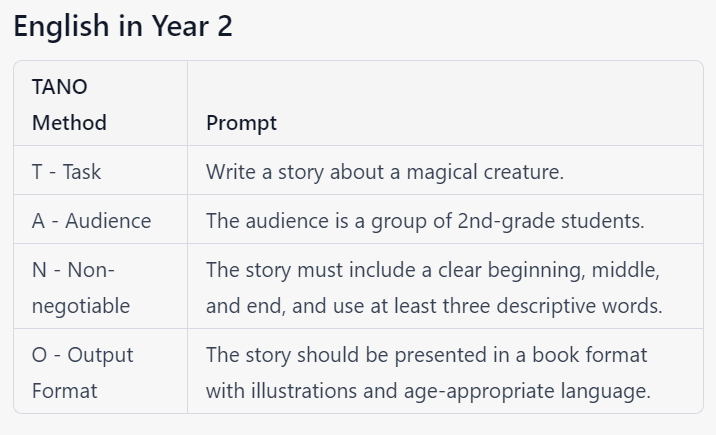
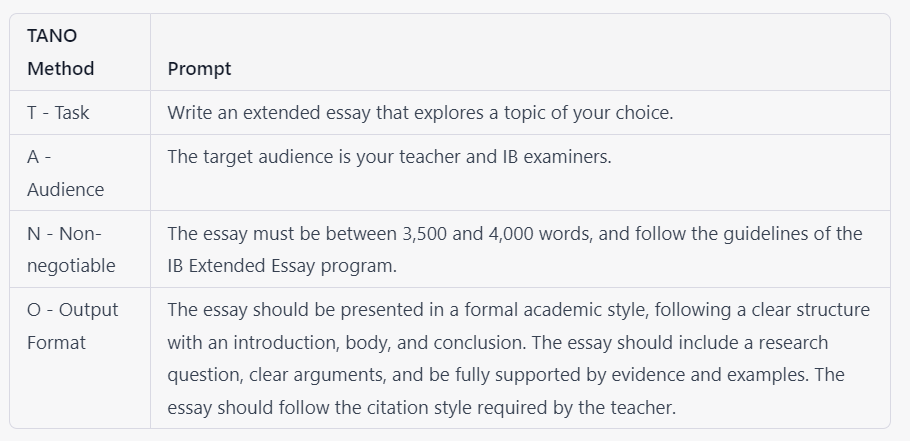
Some of the best and most specific prompts are those that provide clear context and ask specific questions. For example, a prompt like “Can you explain the process of photosynthesis in plants?” is somewhat clear with specific question that can be responded to with a thorough explanation. However, prompts for ChatGPT need to be even more specific. Try using TANO Prompts:
A general format TANO example is above.
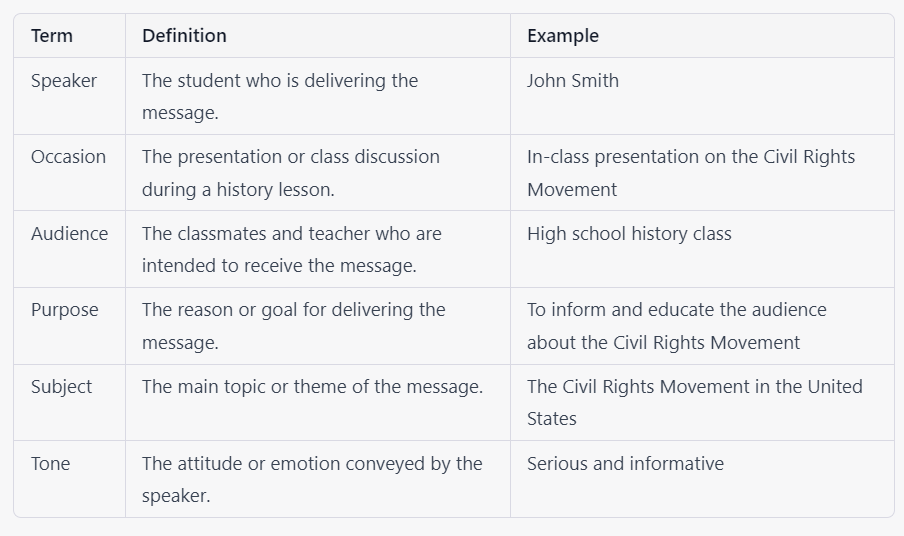
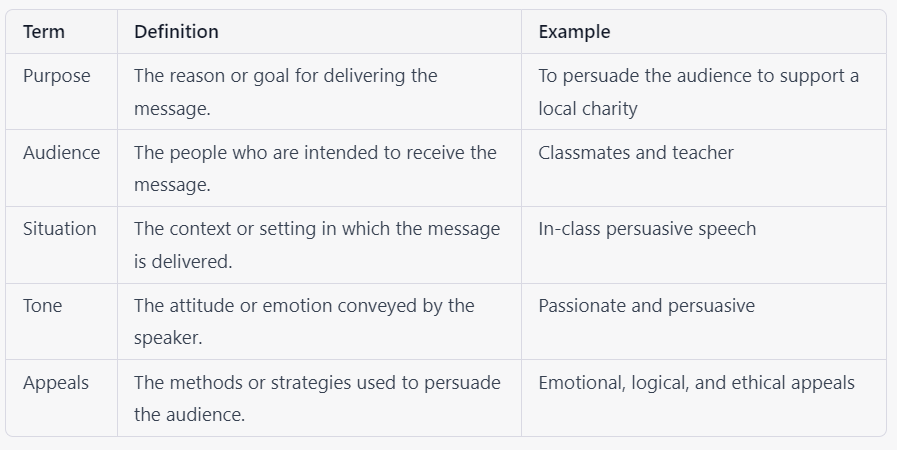
Other common types of prompts where the structure might be used in ChatGPT and their acronyms can be seen below. These, however, might not be as powerful for ChatGPT as Tano. See what parts you might use:
SOAPSTone – This acronym stands for Speaker, Occasion, Audience, Purpose, Subject, and Tone. This type of prompt is often used in literary analysis to help students understand the context and purpose of a particular text.
Example prompt: “Using the SOAPSTone method, analyze the tone of Martin Luther King Jr.’s ‘I Have a Dream’ speech and explain how it contributes to the overall purpose of the speech.” – OR:
PASTA – This acronym stands for Purpose, Audience, Situation, Tone, and Appeals. PASTA prompts are often used in persuasive writing to help students consider the different elements of an argument and how they can be used to persuade an audience.
Example prompt: “Using the PASTA method, write a persuasive essay arguing for or against the use of standardized testing in schools.” – OR:
RAFT – This acronym stands for Role, Audience, Format, and Topic. RAFT prompts are often used in creative writing to help students imagine themselves in a particular role and write from that perspective.
Example prompt: “Using the RAFT method, write a letter from the perspective of a soldier in World War II to their family back home.” – OR:
KWL – This acronym stands for Know, Want to Know, and Learned. KWL prompts are often used in research and inquiry-based learning to help students organize their thoughts and identify areas where they need more information.
Example prompt: “Using the KWL method, create a research plan to investigate the causes and effects of climate change.” – OR:




 education | technology | ai & NOT A.I. | design